
Decision question
Where was dissolved N₂O developing across the ASP, and which measured conditions could help focus further investigation?

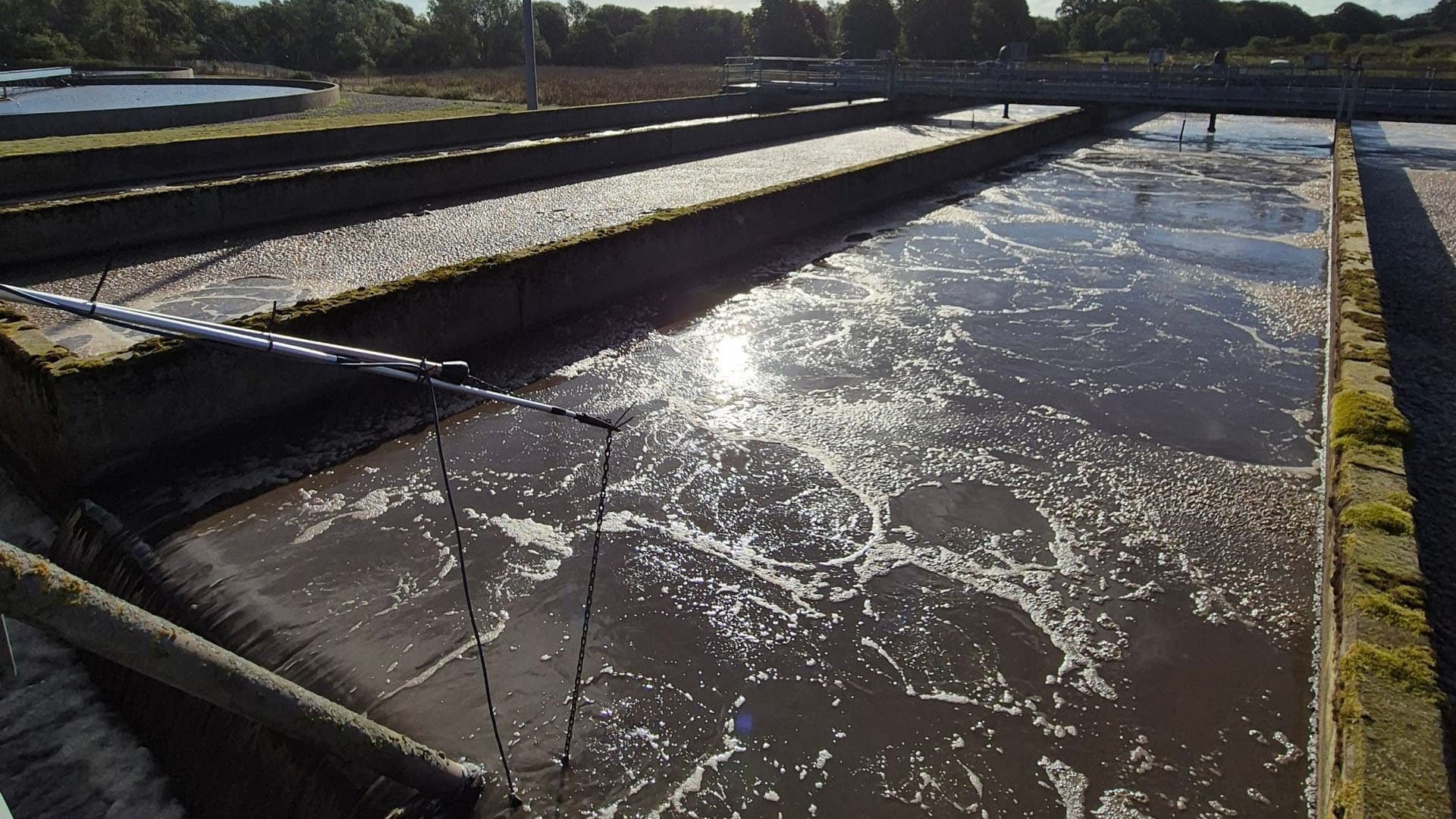
South West Water, Jacobs and BI-Zen combined fixed dissolved N₂O monitoring, a settled-sewage Optimiser and a mobile floating profiling rig across three activated sludge lanes. High-frequency evidence established an ASP baseline, revealed lane-to-lane variation and focused the next stage of investigation.
Where was dissolved N₂O developing across the ASP, and which measured conditions could help focus further investigation?
Large South West Water wastewater treatment works
Carbonaceous activated sludge with downstream nitrifying N.BAFF
Process-emissions baseline and monitoring-method development
Fixed sensors, settled-sewage optimiser and mobile floating profiling rig
The monitoring moved between three ASP lanes, combining fixed and mobile measurements without requiring a permanent installation.
Settled-sewage Optimiser, fixed dissolved N₂O monitoring and mobile profiling across three ASP lanes.
Build a site-specific ASP baseline and test an agile method for process-emissions investigation
Generic emission factors and limited sampling could not show when or where dissolved N₂O developed
Without aligned process evidence, future monitoring or mitigation may focus on the wrong location or mechanism
Fixed monitoring and mobile profiling turned a broad emissions question into a focused programme of process evidence
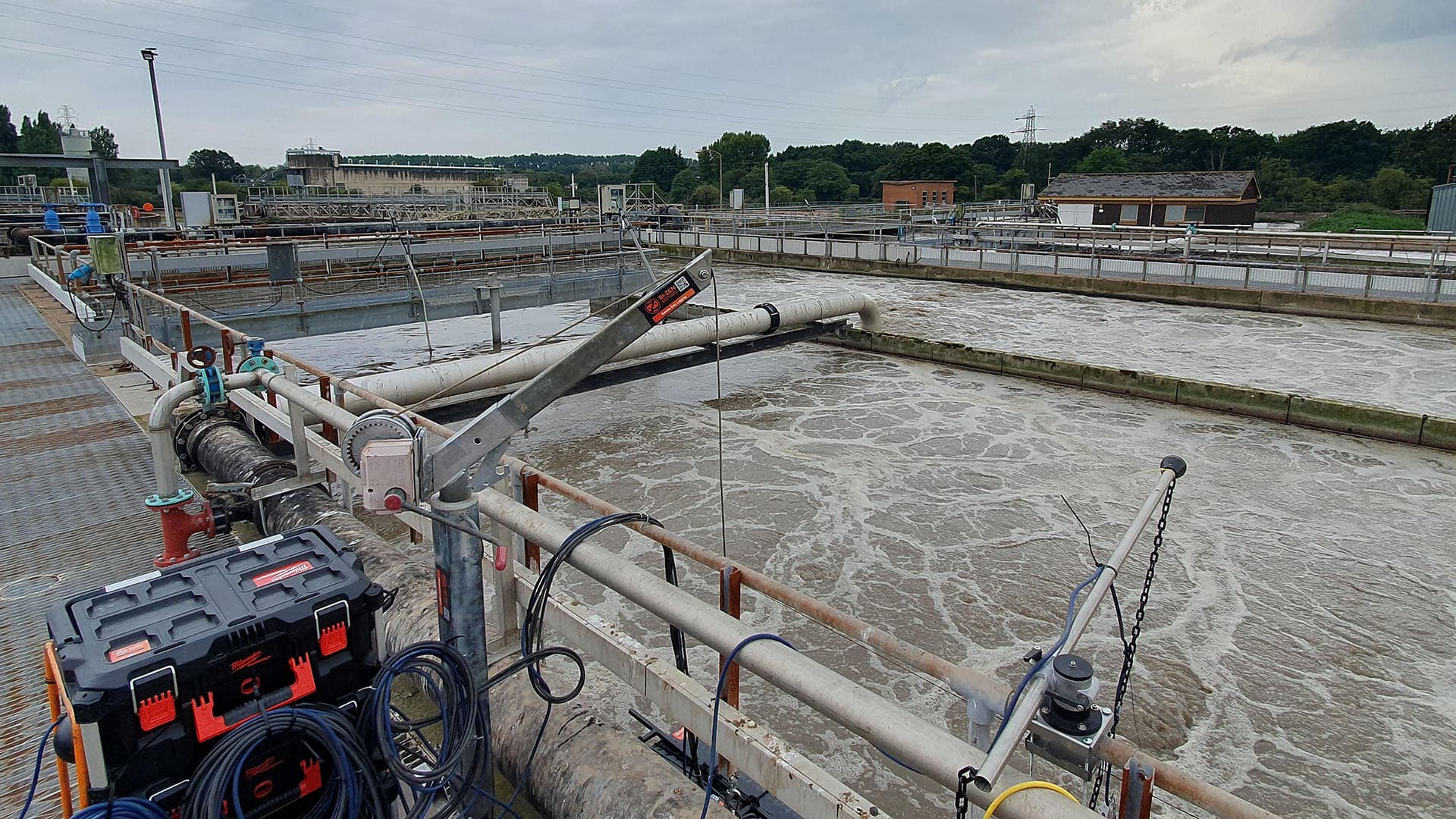
Settled-sewage optimiser, fixed N₂O sensors and a floating profiling rig across three ASP lanes
N₂O, ammonia, nitrite, nitrate, DO, COD, pH, ORP and temperature
Settled-sewage load, lane flow, airflow and operational information
BI-Zen monitoring and live data, with Jacobs emissions calculations and interpretation
A mobile floating platform carried sensors for dissolved N₂O-N, NH₄-N, NO₂-N, NO₃-N, COD, dissolved oxygen, redox and supporting process parameters.
The IoT-enabled system logged at one-minute intervals as the platform profiled conditions across the ASP
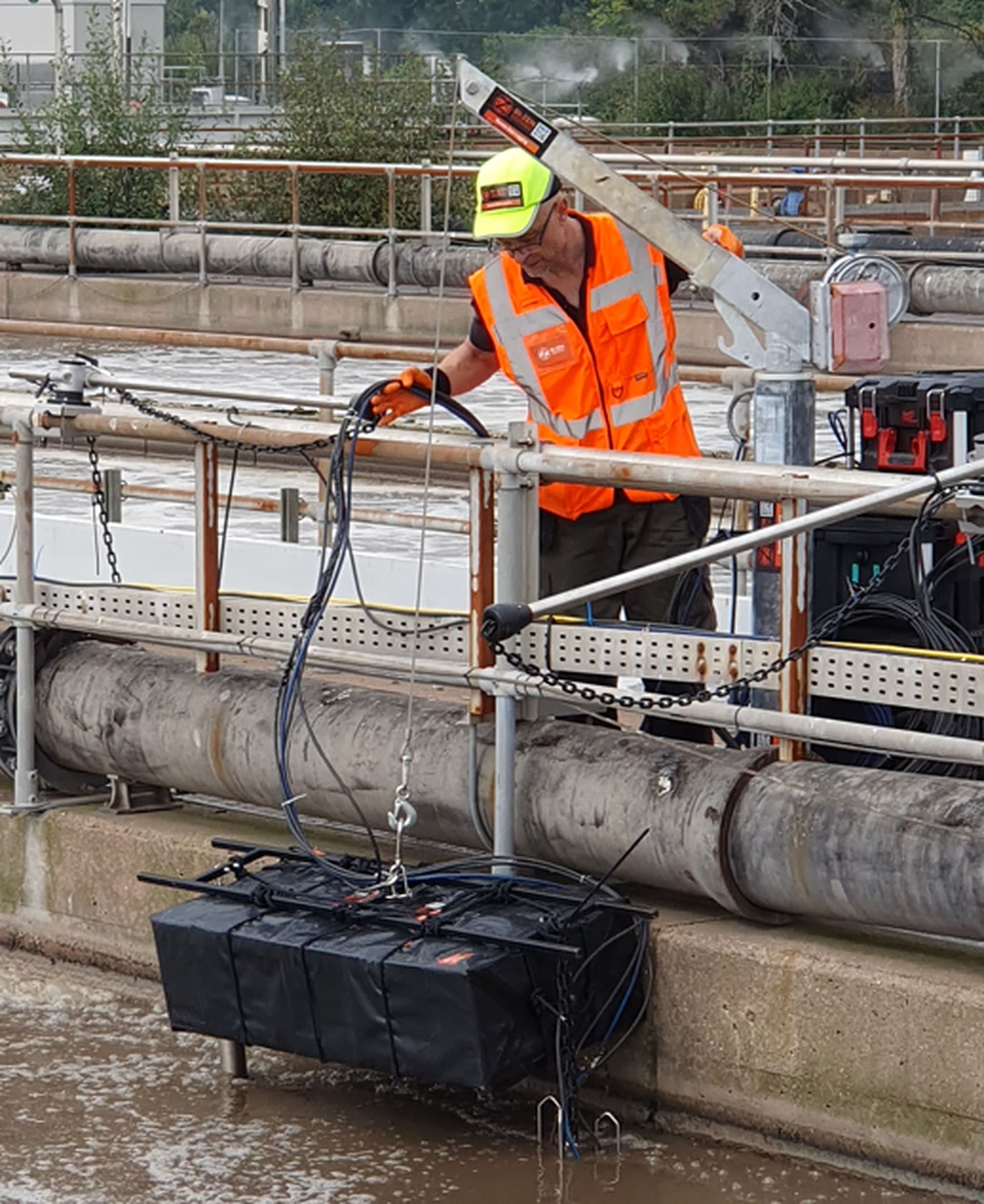
The three monitored lanes showed different dissolved N₂O behaviour despite broadly stable incoming flow and load. Aligned N₂O, nitrite and nitrate profiles provided evidence of partial nitrification and established an ASP emission-factor range of 0.05–0.4% N₂O-N/TN incoming for the monitored periods. The data did not prove a single cause, but it narrowed the conditions and locations requiring further investigation.
South West Water gained a site-specific ASP baseline and a repeatable, agile monitoring method. The evidence supported seasonal follow-up, further review of lane loading and aeration, and separate investigation of the downstream nitrifying N.BAFF.