
Decision Question
What storm flows and pollutant loads reached the works, how did the existing HST respond, and what duty should inform the new side-stream treatment design?

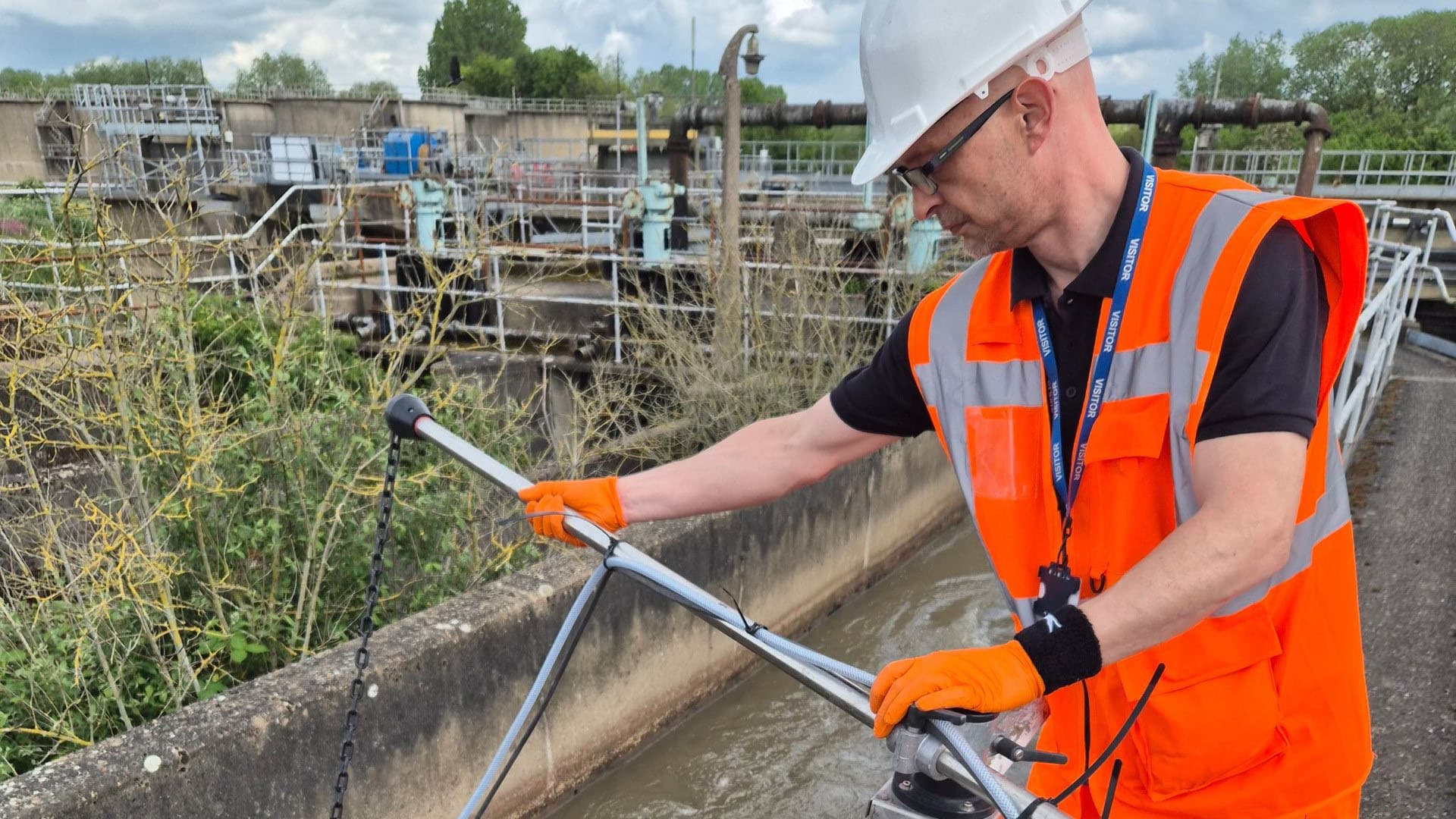
Temporary high-frequency monitoring captured storm loads that conventional sampling had missed. The evidence helped the project team assess solids capture, review design assumptions and consider whether additional settlement capacity was required.
What storm flows and pollutant loads reached the works, how did the existing HST respond, and what duty should inform the new side-stream treatment design?
Biological filter works Approx. 22,500 PE
Primary settlement, biological filters, HSTs, nitrifying filters and tertiary filtration
Design and optioneering
Two temporary Optimisers at the works inlet and HST outlet
Two Optimisers provided a time-aligned view across the treatment stage.
1 Works inlet 2 HST outlet
An increased full-flow-to-treatment requirement and the need to develop new side-stream storm treatment
Earlier sampling had not captured storm onset, first-flush loading or longer events, leaving the design basis uncertain
Observed evidence was needed to assess settlement capacity and headroom, and quantify the storm duty informing the new side-stream process
Two temporary Optimisers aligned inlet loading, client flow data and HST response during live storm conditions.
Two temporary Optimisers at the works inlet and HST outlet.
COD, ammonium, nitrate, turbidity, redox, pH and temperature.
Client flow information through a live site dashboard.
Deployment, maintenance, data-quality checks and access to usable evidence while monitoring remained live.
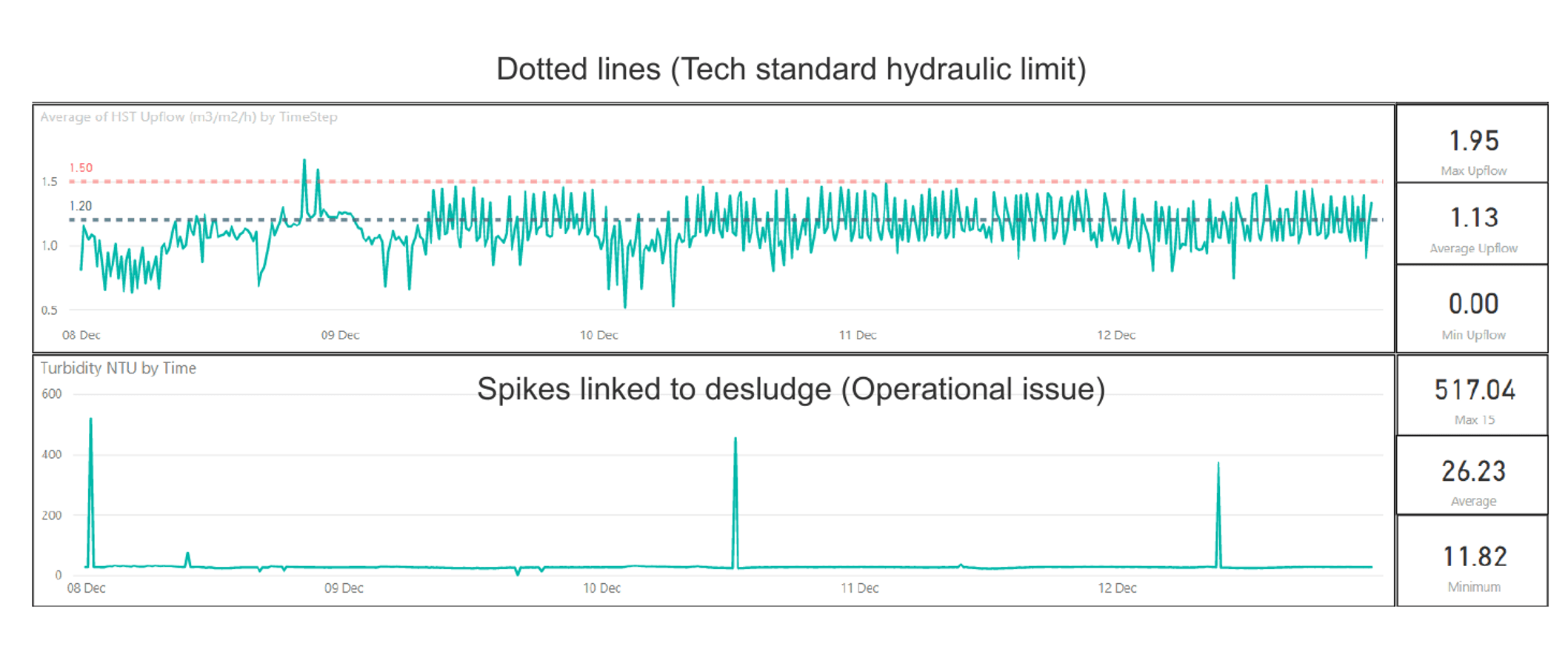
High-frequency monitoring captured storm onset, first-flush loading and longer events that conventional sampling had missed. By aligning works inlet load, flow and HST outlet turbidity, BI-Zen quantified the actual storm duty reaching the works and showed how the existing settlement stage responded.
The evidence confirmed that the HSTs maintained effective solids capture across the monitored hydraulic range, avoiding unnecessary investment in additional settlement capacity. Crucially, it also showed that the proposed side-stream treatment process would have been undersized against the observed storm duty. Anglian Water was therefore able to revise the design before construction, avoiding the cost, disruption and performance risks associated with correcting an undersized solution later.
Anglian Water used the measured site evidence to revise the side-stream storm treatment design. The completed scheme reflects the observed storm loads.
The smaller option developed from the earlier design basis would not have met the monitored duty.