
Decision question
How would an IED-related change to sludge treatment affect ammonia loading, process headroom and the future role of the ASP and N.BAFF?

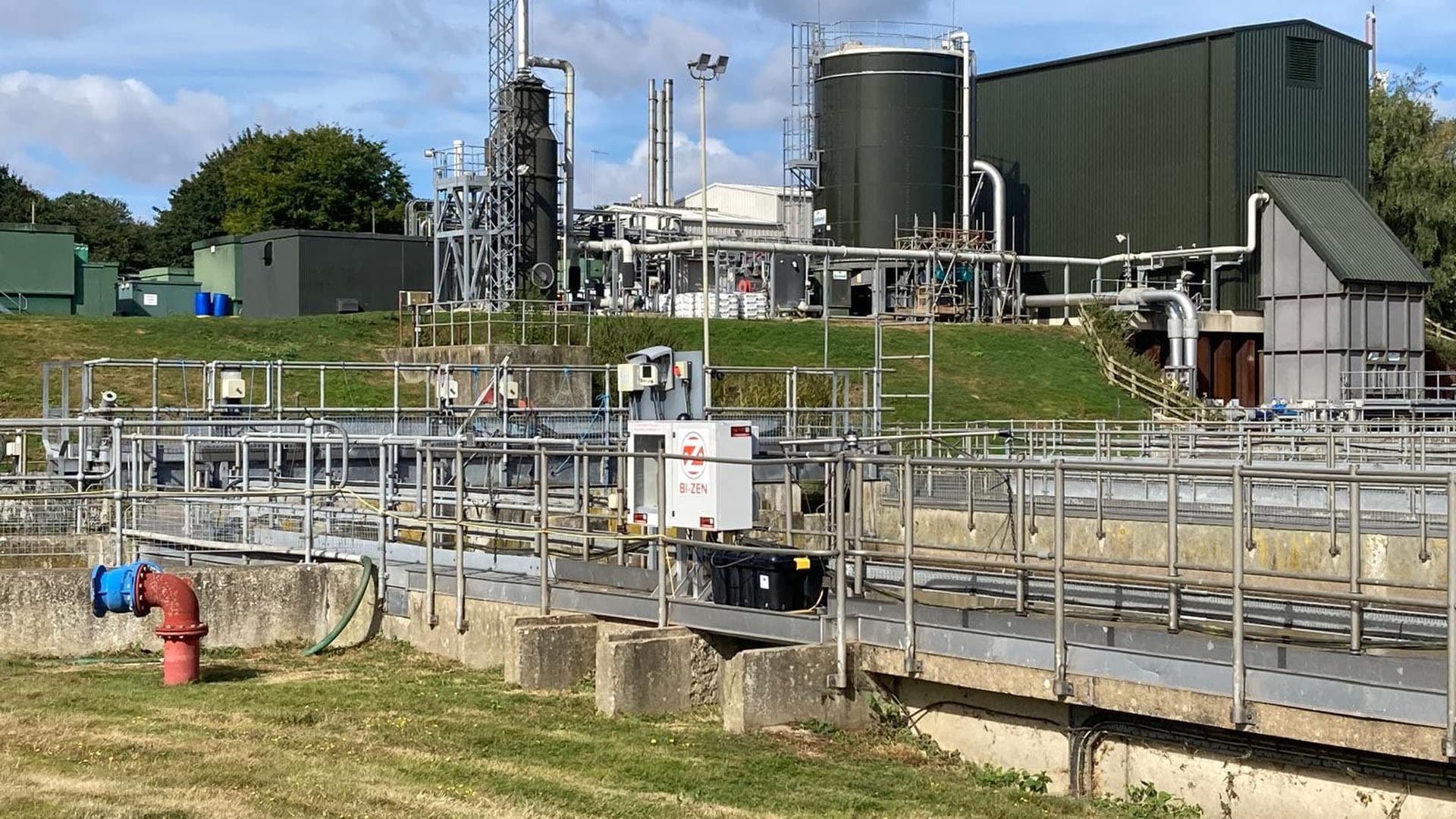
An Industrial Emissions Directive (IED) related review of sludge treatment required the client to understand how reduced digester throughput could affect ammonia loading and future asset needs. Five temporary Optimisers challenged earlier capacity assumptions, confirmed the continuing role of the N.BAFF and informed a controlled four-of-six-cell strategy with potential annual OPEX savings of approximately £275,000.
How would an IED-related change to sludge treatment affect ammonia loading, process headroom and the future role of the ASP and N.BAFF?
Large regional wastewater treatment works
Primary settlement, carbonaceous ASP, final settlement and six-cell nitrifying N.BAFF
IED-related sludge strategy and whole-site capacity assessment
Five Optimisers across primary settlement, ASP and N.BAFF locations
Five Optimisers and mapped site instruments aligned ammonia loading and removal across primary settlement, the ASP and N.BAFF.
Five optimisers spanning works inlet, primary settlement, carbonaceous ASP and N.BAFF monitoring points
Understand how IED-related sludge-treatment changes would affect the liquid process and future asset strategy
Earlier assessments overstated digester liquor loads and did not resolve the actual role or capacity of the ASP and N.BAFF
The strategy risked unnecessary capital or the wrong asset decision if it relied on unverified loading assumptions
Granular monitoring and revised process modelling changed the understanding of loading, capacity and the future asset strategy

Five Optimisers across primary settlement, the carbonaceous ASP and N.BAFF
COD, ammonia, nitrate, nitrite, DO and supporting process parameters
Flow, SCADA, return-liquor assumptions, existing ammonia instruments and supplier design data
Live dashboards, sensor QA, mass balance and whole-site process headroom assessment
Measured return liquors contributed less than 10% of the ammonia load, challenging earlier assumptions about the benefit of reducing digester throughput. Converting the carbonaceous ASP to nitrification was not practical without significant investment, so the N.BAFF remained essential. Revised loading and supplier design data indicated that four of six cells could meet the duty under robust control.
The evidence supported retaining the N.BAFF, reinstating divert control and targeting maintenance before major investment. Improved sensor-led control and a four-of-six-cell strategy provided a route to meet future demand with potential annual OPEX savings of approximately £275,000.